
I recently played a recreational doubles session with some friends that I thought would make a great demonstration of PEWPEW Analytics. (Note: purely a coincidence I had a good day 😉 )
Quick background on PEWPEW
PEWPEW (Player Estimated Win Probability Effect With shots) is an analytics system that uses shot-level video data to estimate how much each shot increased or decreased a team’s chances of winning the rally.
For example, if you hit a great setup shot that forces a weak reply and your partner finishes the point with an easy winner, PEWPEW credits both shots appropriately. The winner matters, but so does the shot that created the opportunity.
PEWPEW is not designed to evaluate stroke mechanics or prescribe technique. Its goal is to measure the impact of a player’s shots to help explain winning and losing, identify areas for improvement, and track performance over time.
The result is a reporting framework that isolates individual player performance from the noise created by partners, opponents, and match outcomes.
Those shot values can be aggregated into game-level ratings, phase ratings, and performance reports that answer questions traditional ratings cannot like:
- How well did I play in that game or session, independent of my partners and opponents?
- Which phases contribute most to my winning/losing that match or session?
- What were my strengths and weaknesses and how do they track across games and sessions?
Sample reports/insights
How did everyone play?
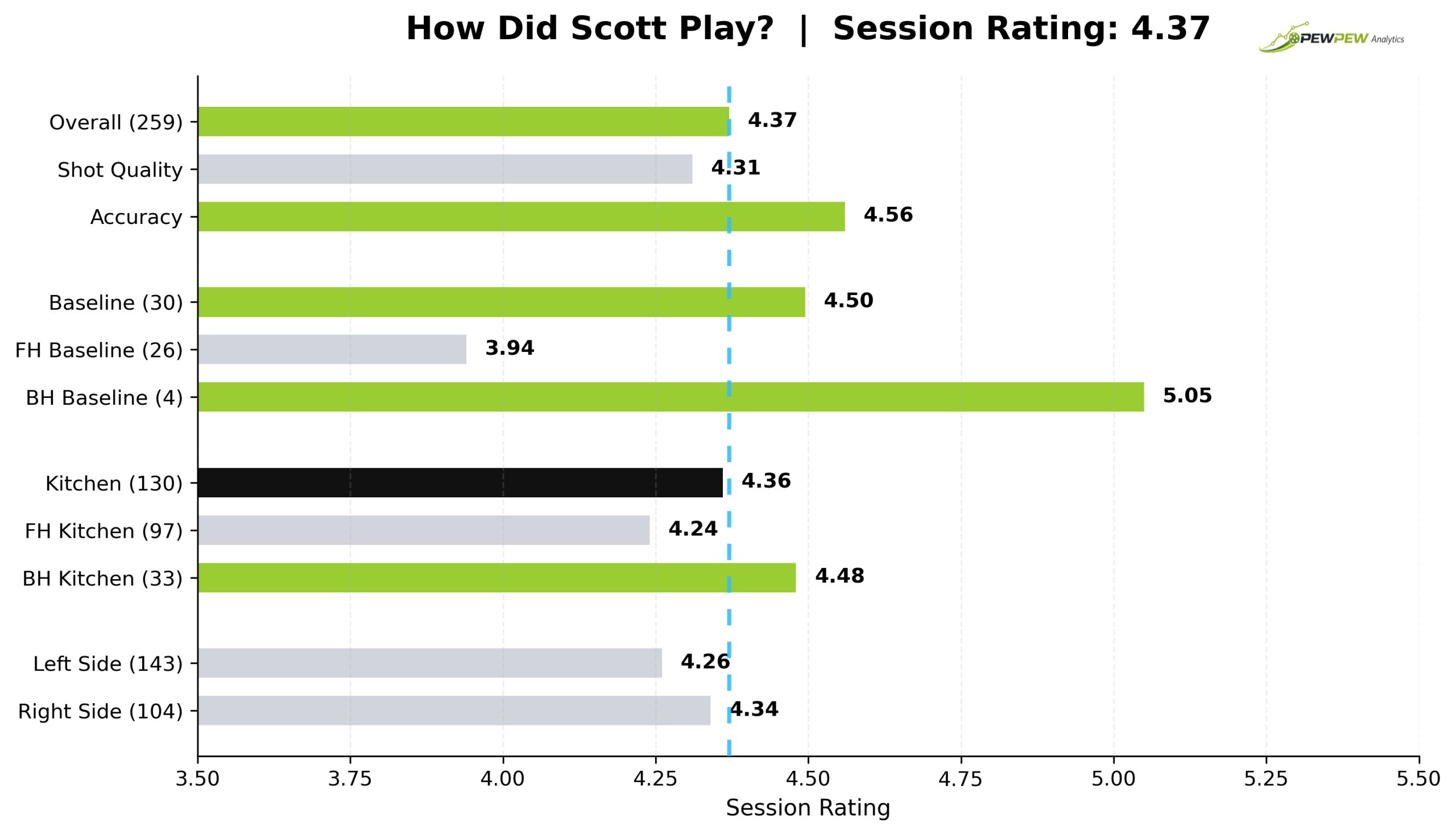
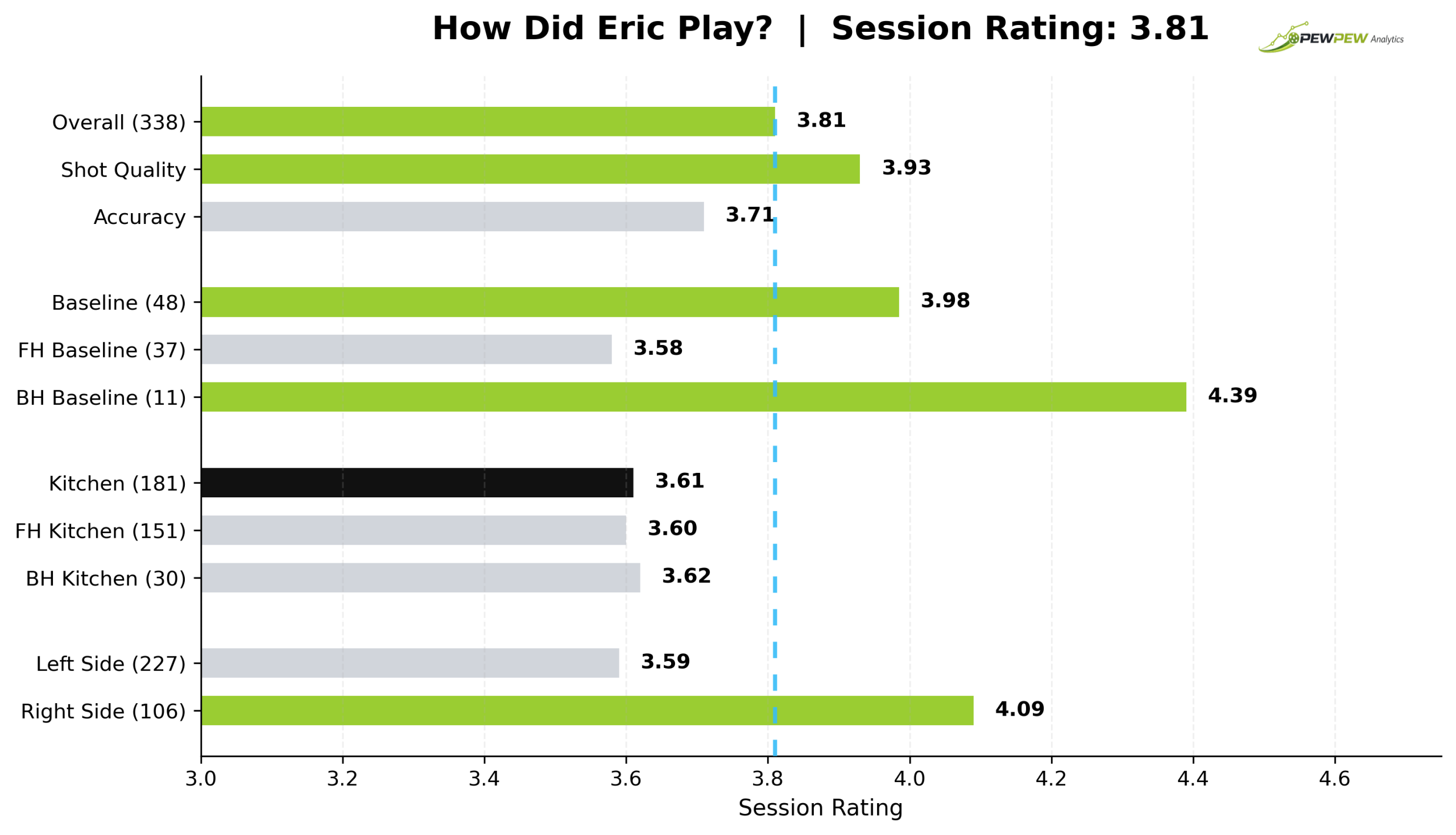

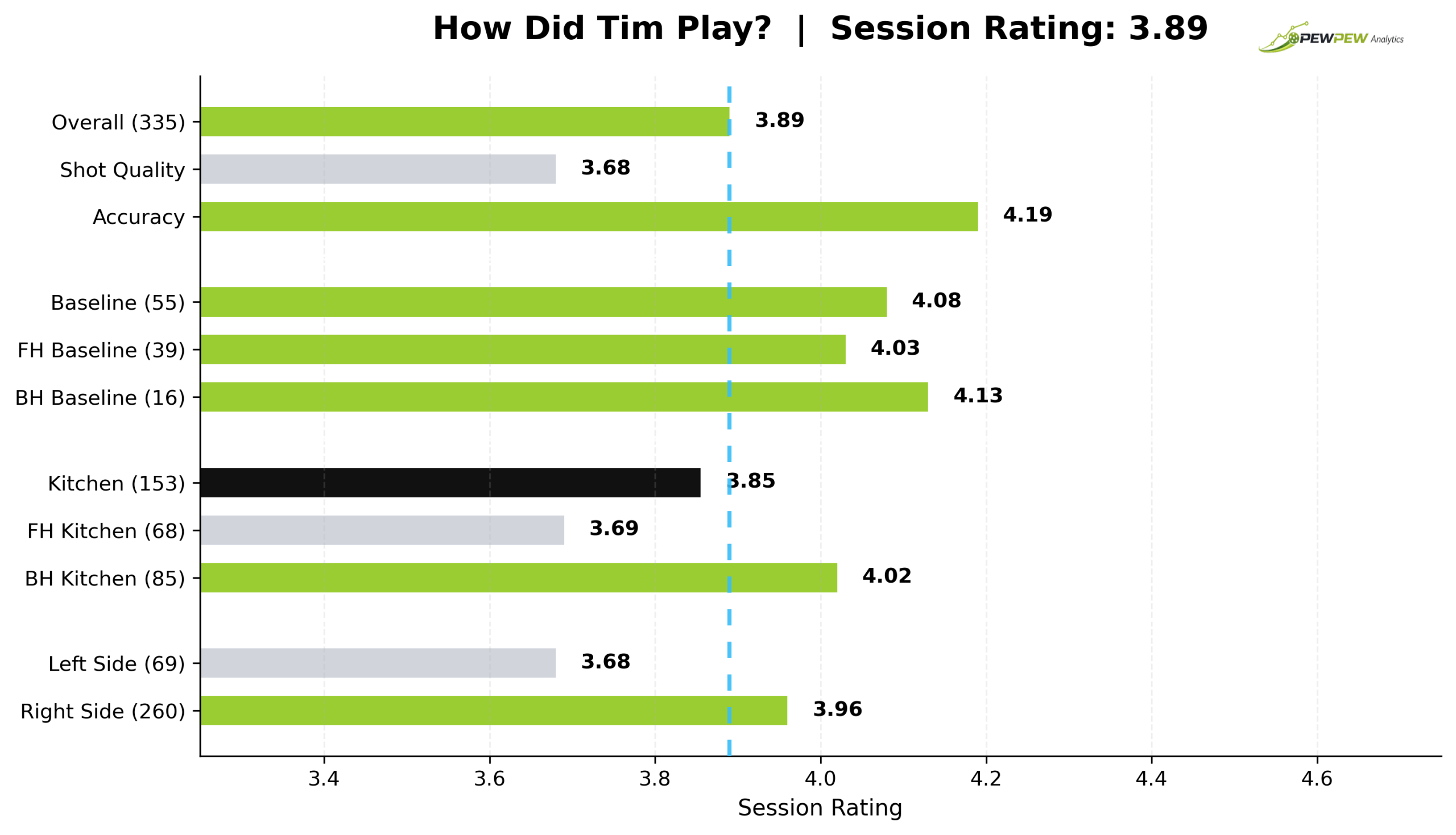
- Scott was the best player today in overall rating with Eric/Ben/Tim all around the same level.
- The first fundamental way PEWPEW splits game-level player ratings is by Shot Quality vs Accuracy. Shot Quality is based on the value of your shots that are in while Accuracy is based on the percentage of shots that are in. These represent risk vs reward, aggressive vs safe, etc.
- Eric was the least accurate but came close to Tim/Ben in overall rating thanks to the quality/aggressiveness of the shots he made in.
- All players rated higher from the baseline vs kitchen with Scott and Tim having a smaller drop-off in kitchen rating than Ben and Eric.
- All players played better from the right side vs left side (note: Tim is lefty and stacked – hence his left/right shot skew)
What phases drove winning/losing?
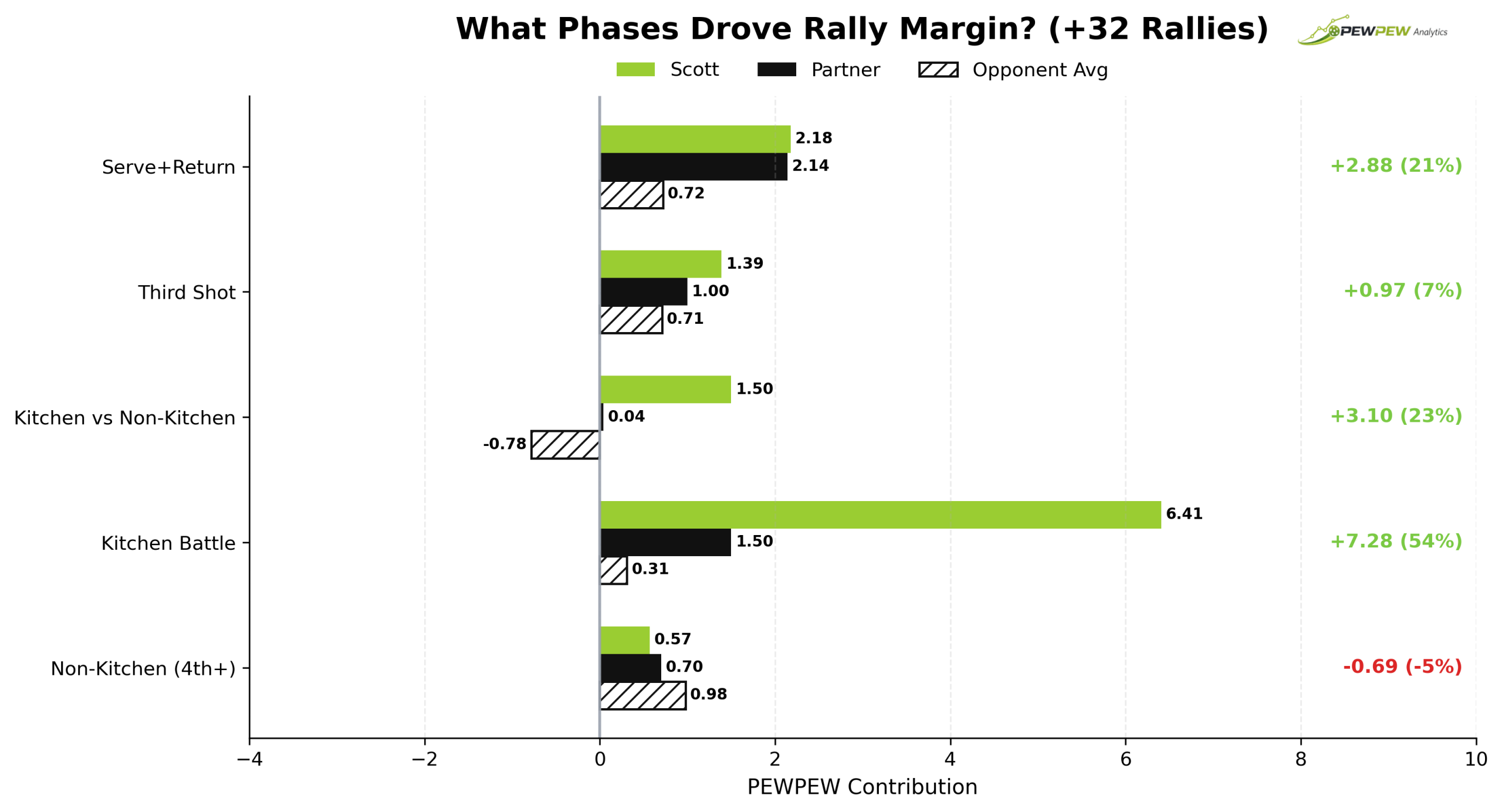
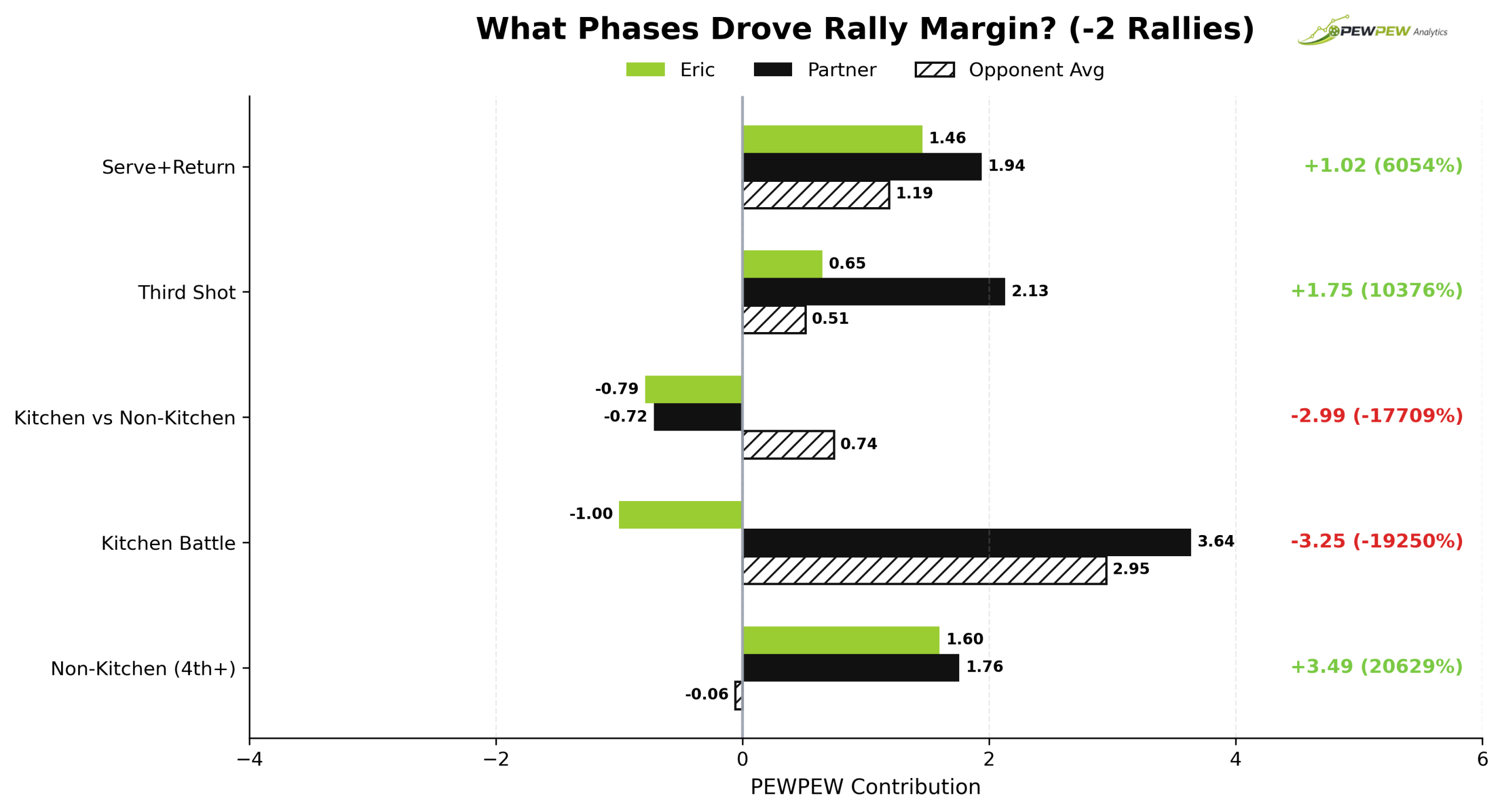
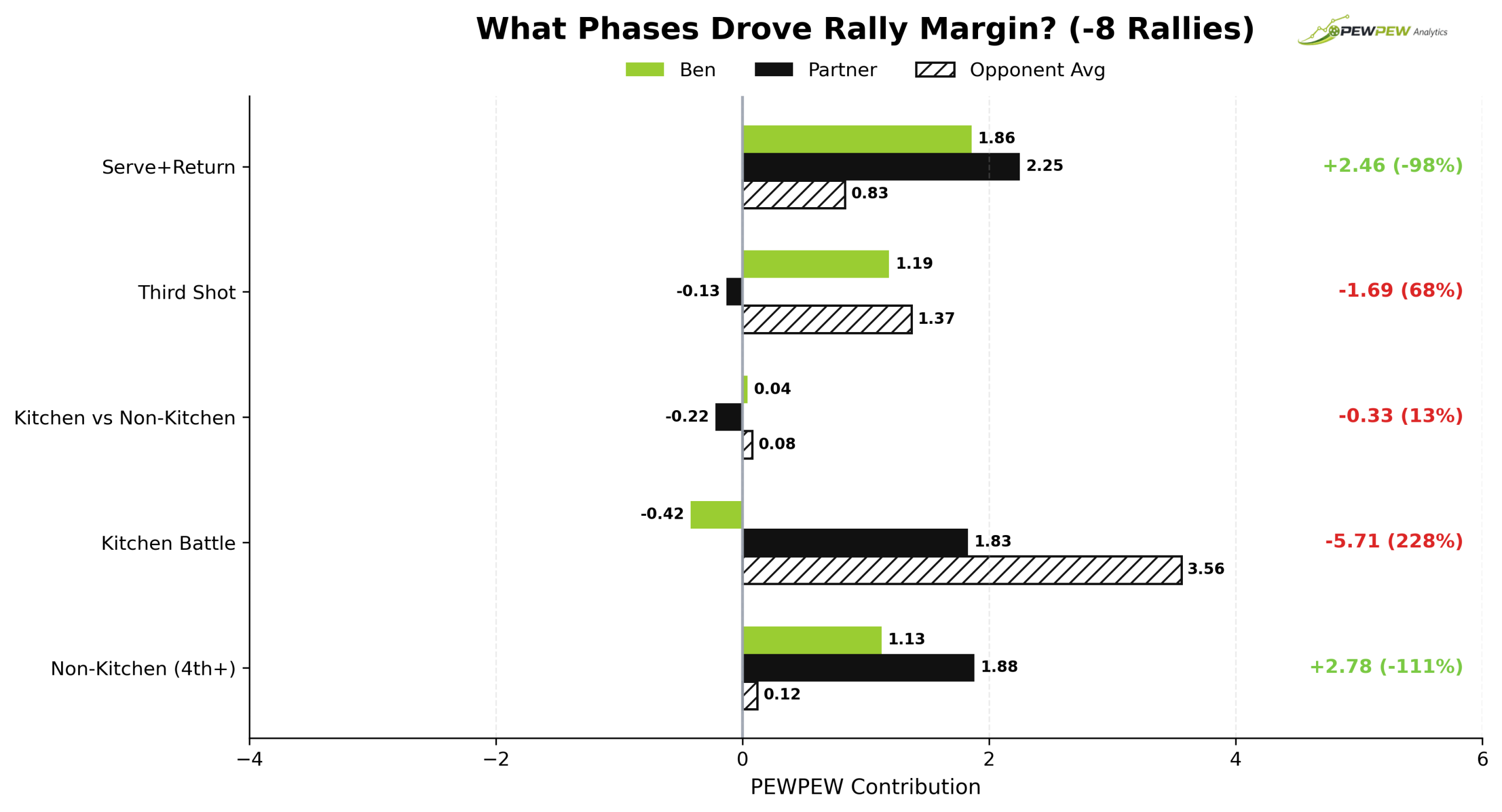
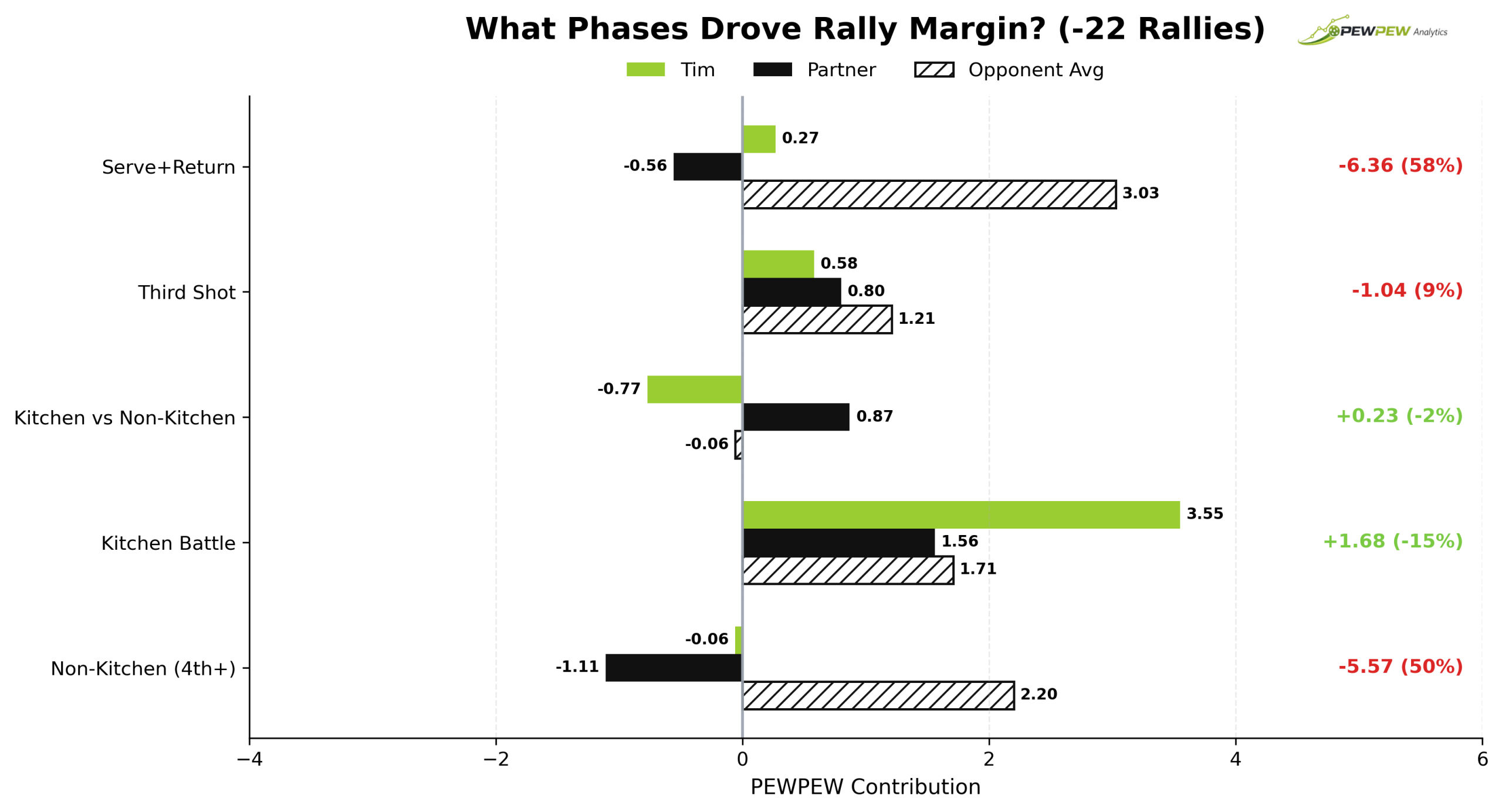
- Scott’s +32 rally advantage across six games was driven by his team’s kitchen play – both in kitchen battles (54%) and maintaining the advantage when in the kitchen and the opponents were outside the kitchen (23%). Some of this is likely by necessity as shot counts suggest his partner(s) were targeted in most/all the matches.
- Eric’s -2 rally disadvantage was driven by positive baseline play and net-negative kitchen play. Eric had some good fortune as his partners outplayed the opponents.
- Ben’s -8 rally disadvantage was predominantly driven by his challenges in kitchen battles – both the quality of his play and strong opponent play.
- Tim’s -22 rally disadvantage came despite slight kitchen advantages thanks to major differences in the Serve + Return and Non-Kitchen shots (excluding first 3 shots) – largely driven by poorer partner play and strong opponent play.
What phases were strengths vs weaknesses?
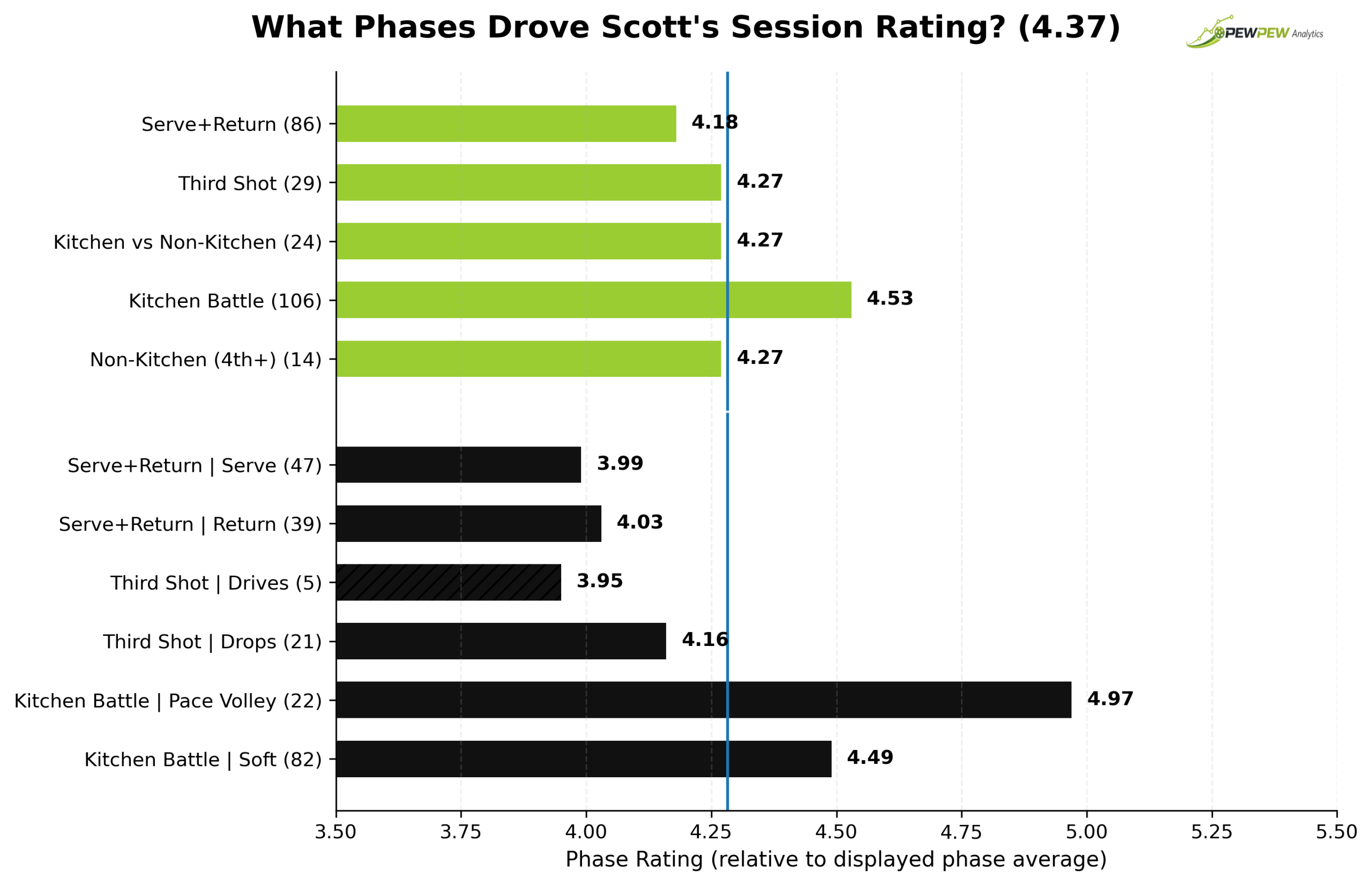
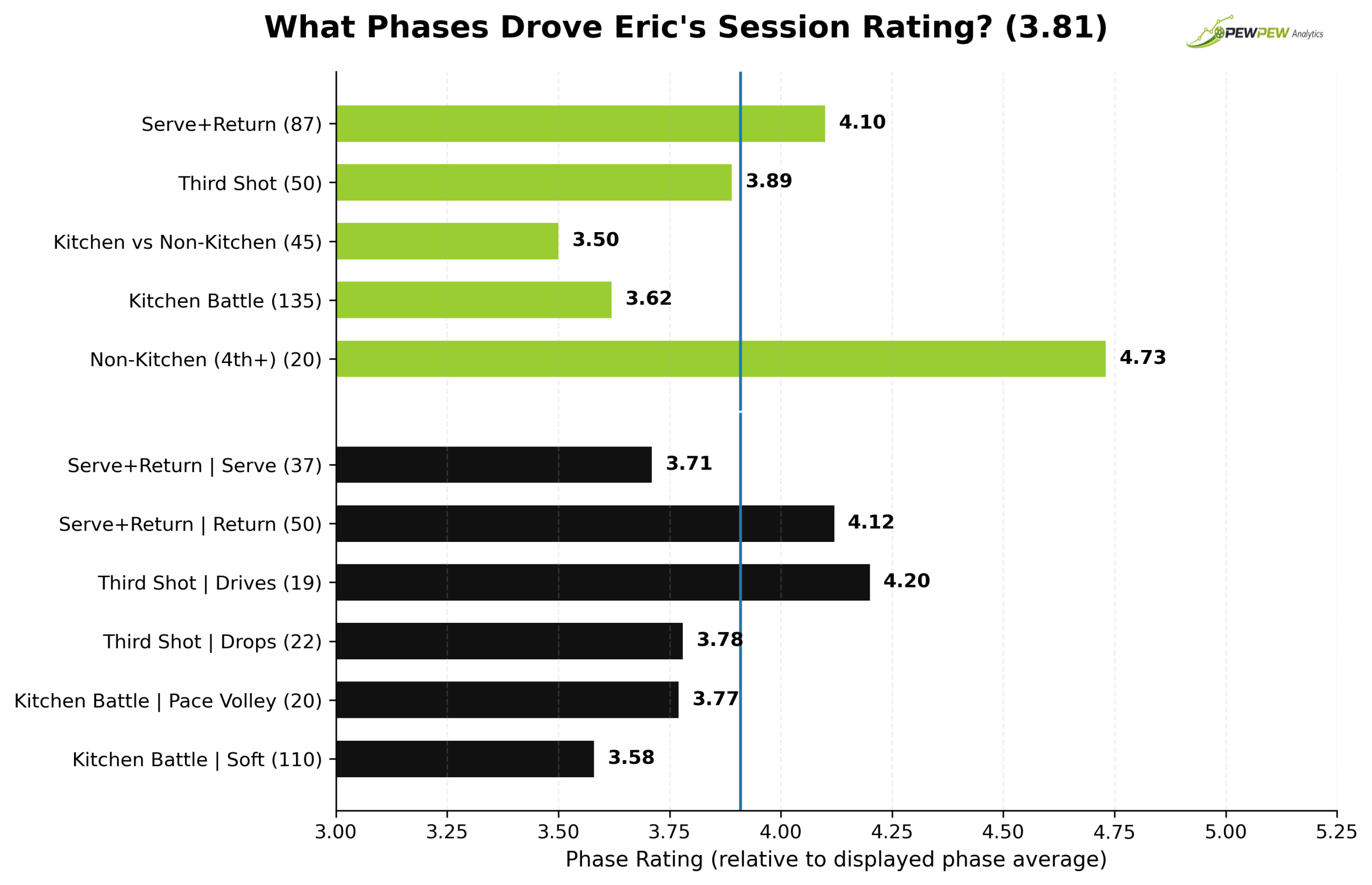


- Scott had an all-around good game with Kitchen Battles being the key strength for the session.
- Eric and Ben had similar strengths (baseline) and weaknesses (kitchen, drops/dinks) though Ben’s speedups were better.
- Tim was generally even across phases with some strengths in kitchen pace and third shot drops and relative weakness on serves/returns/drives.
Game by game player performance


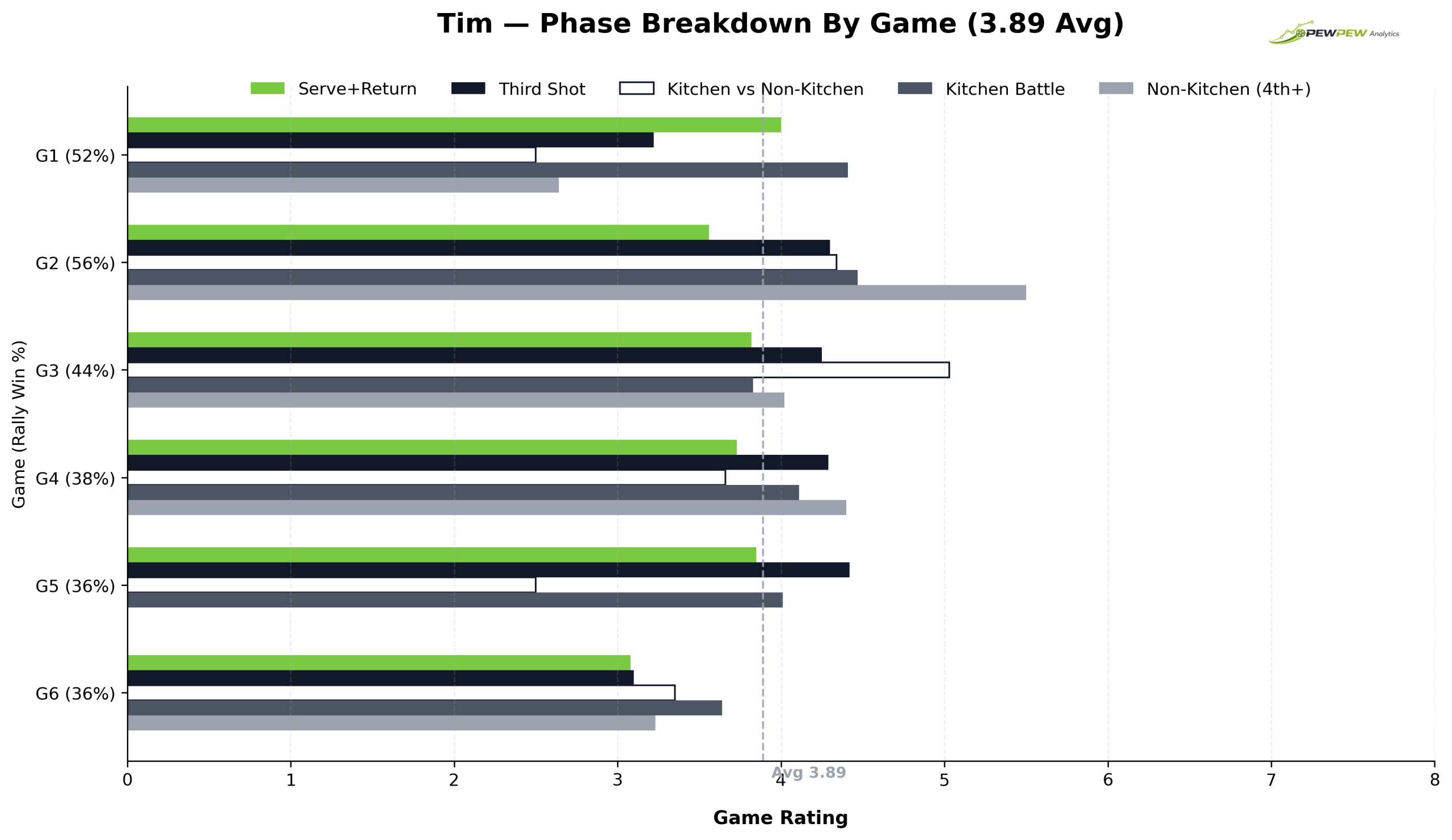
- One of the most interesting findings from this session is that team results and individual performance are not the same thing.
- At the team level, PEWPEW ratings correlate extremely strongly with rally margin (r² ≈ 0.9). Teams that play better should generally win more rallies.
- At the player level, however, the relationship is much weaker. Partners and opponents matter. A player can perform well in a losing effort or struggle in a game their team wins comfortably.
- The reports above help separate those effects by identifying where value was actually created throughout a match.
Leave a Reply